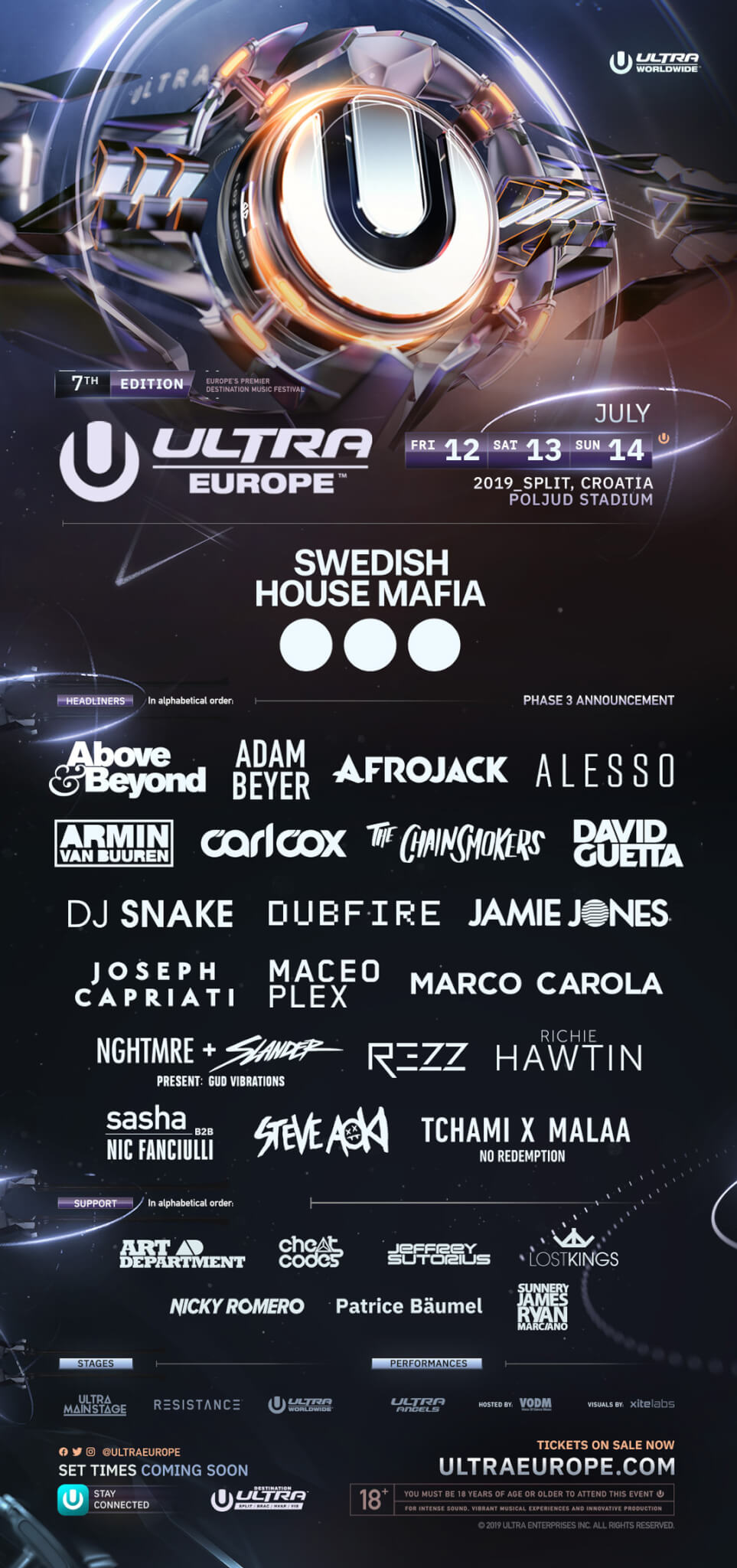
[EDC, Ultra, S2O] Japan Imports Overseas Festivals but Exports None [Truly Galapagos]

In May, EDC JAPAN, in July, S2O JAPAN, in August, Summer Sonic, and in September, Ultra Japan: festivals continue as if racing through summer...
Seeing them written out, Japanese versions of overseas festivals really stand out—that is what I noticed.
Of course, I do not think Japanese versions of overseas festivals dominating is bad, provided they are connected to the global scene.
But as I have written several times on this blog, what looks connected to the global dance music scene actually follows Japan's own direction and vibe, in a so-called Galapagos state.
There was also a time when there were many homegrown festivals, including good ones, but their presence undeniably tends to be overshadowed by Japanese versions of overseas festivals.
That raised a question for me: “Why are overseas festivals imported, while domestic festivals never even get as far as being exported?”
So this time, I will examine why overseas festivals are imported but domestic ones are not exported, with plenty of personal opinion and sometimes without mincing words.
Because Japan Lacks the Pride of an Advanced Economy
 This may sound like a leap, but I think it is the truth.
EDC and Ultra are worldwide festivals originating in America. Tomorrowland, though not imported to Japan, originated in Belgium.
Looking into others shows that worldwide festivals are run by advanced economies. Emerging economies almost never move into advanced economies.
Advanced economies are inherently supposed to lead in culture and entertainment too.
You can see this in America's Hollywood film culture or the Walt Disney group, for example.
However, Japan, despite being an advanced economy, has long been extremely passive in this respect.
That is obvious from the crowds flocking to Disney in Tokyo and Universal Studios in Osaka.
Festivals are following exactly the same path. S2O is a Thai festival, but despite its rapid growth, Thailand is an emerging economy that originally followed behind Japan.
Recently, on top of that, something called Ultra Korea Pre-Party (Ultra Korea Official Afterparty) was held at ageHa.
They are now borrowing the name of a festival in another country that is not even held here (and although unrelated to entertainment, it is not a friendly country either).
There is surely no pride or anything of the sort there.
So Why Can They Not Take the Step toward Exporting?
 I think there are three broad reasons.
Because There Are No DJs with Global Reach
A strong roster of internationally recognized DJs naturally draws attention to a country's festivals and events, providing a catalyst for expanding overseas. You can see this in Britain, the Netherlands, and Spain.
There are probably many reasons for failing to make it internationally, but fundamentally the cause is an environment that does not make use of talented, motivated people.
A clear example is that Japan's dance music industry has a bad custom of dangling “auditions” and “contests” as bait under the pretense of nurturing young talent, only to crush it or let it fade into ambiguity.
For example, Y, who supposedly played alongside Avicii in Europe and used to appear frequently at domestic festivals: winning a contest carrying a beverage manufacturer's name does not mean you will continue succeeding globally. In the worst cases, people disappear, haha.
Of course, it is absolutely right that you should not expect support forever, but those kinds of “auditions” and “contests” are not proactive about following or promoting subsequent achievements.
From a business perspective, once there is no particular monetization opportunity, perhaps being left alone afterward is inevitable. Applicants need to understand that.
As a result, even briefly getting a big stage through an “audition” or “contest” only makes you a local DJ with a slightly higher position at local events.
In reality, the Japanese DJs who make it globally are pretty much only Satoshi Tomiie and Ken Ishii.
They were pioneers in the early club scene who succeeded through their own strength, but without a system and track record of producing many successes at their level, Japan's festivals will not attract attention from abroad.
Because the Old Guys Running Japan Do Not Accept Dynamism
Festivals are extraordinary experiences, so wildly ambitious concepts and production matter.
Tomorrowland and EDC have crazily extravagant production, and Burning Man's setting and content are very, very crazy too.
They do their utmost to push the experiential value to the limit. Yet Japanese festivals seem to operate fearfully under restrictions, saying “the Fire Service Act...” or “the Road Act...”.
In Japan, even a wonderfully dynamic event plan that will not cause accidents gets rejected because of possibly outdated restrictions (laws).
You might wonder why not try breaking such restrictions, but if anything happens, the trashy mass media seize the opportunity to launch destructive reporting. Restrictions affect future editions, so strict compliance is essential.
In short, you could call them half-hearted festivals created while nervously watching old men who do not understand dance music or festivals.
Such festivals cannot possibly attract the world's attention.
Because Many Audience Members Do Not Care Who the DJs Are
These are festivals where it is perfectly normal for people to have no particular act in mind, or not remember one, even on the day.
Their atmosphere does not resonate with festivals worldwide, so they cannot attract attention.
To Put It Mildly, Japan's Scene Is Declining
 As described, Japan's festivals do not merit international recognition, so naturally they do not reach the point of being exported.
On top of that, the population is aging and shrinking, and most customers “graduate” as their life stage changes. Audience numbers will keep decreasing; growth or even maintaining them looks hopeless.
Since crowd size is itself part of a festival's content, decline is probably inevitable. Indeed, Ultra Japan 2019 abandoned the usual three-day format and shifted to two days.
You cannot resist this trend, so I think life will be more enjoyable if you actively travel overseas for fun, make friends abroad, or, if you DJ, seek places that appreciate you more and flexibly change where you work.
That is it for this article.
Related articles

[Simple and Clear] Why Japanese Festivals, Including Ultra Japan and EDC JAPAN, Take So Long to Announce Their Lineups [Galápagos]
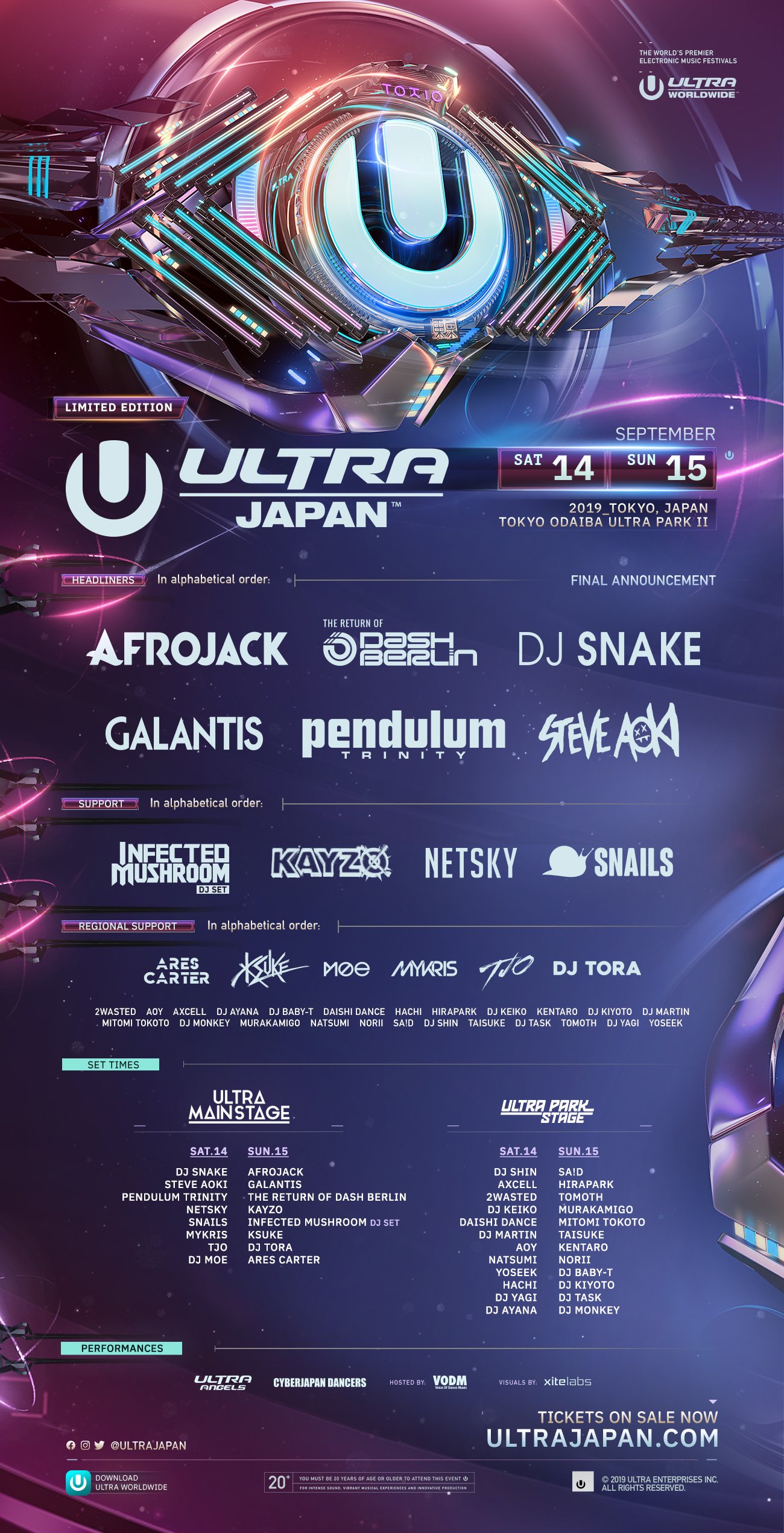
[Far Too Feeble…] Ultra Japan 2019's Final Lineup and Daily Schedule Announced [Completely Finished]
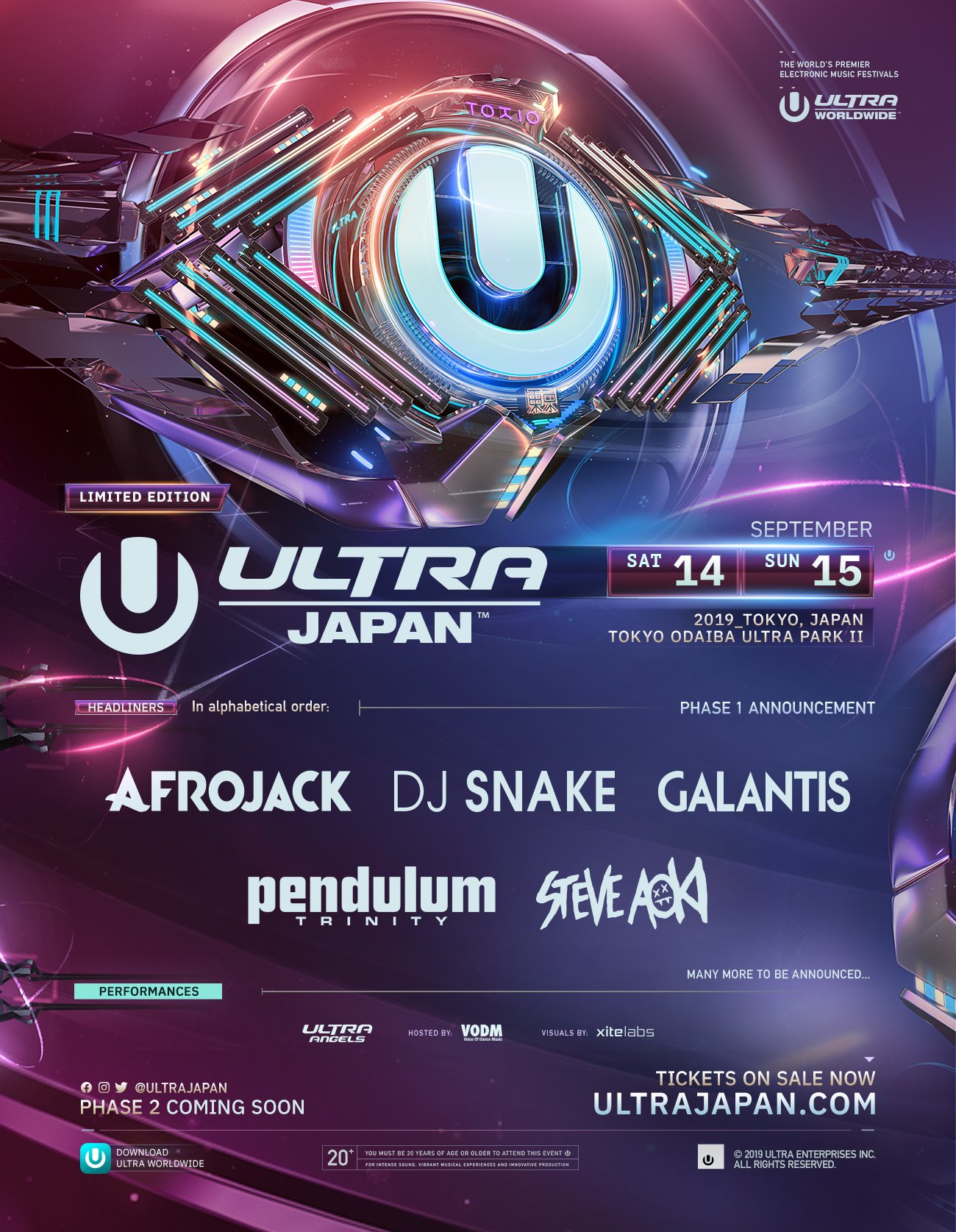
[Disappointing!?] Ultra Japan 2019 Lineup Announced [Phase 1]