[Changing Times] EDM Is Over. The Future Is “Dance Music” After All [Techno]
An article on Mixmag Japan entitled ‘Techno Maintains Its Position as Beatport's Best-Selling Genre (This link was unavailable when checked in October 2026.)’ included this passage.
To ‘help independent music and labels grow’, Beatport is introducing a new feature called ‘Hype Charts’.
Launching in June, the feature aims to shine more light on small labels and make distinctive, noteworthy tracks from around the world easier to discover.
(Passage omitted)
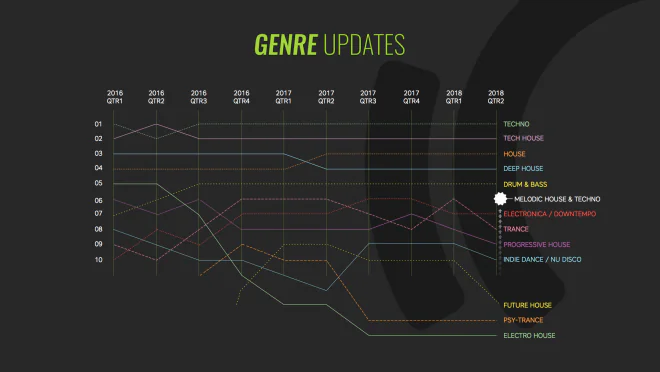
Alongside the new feature, Beatport also announced its ranking of the best-selling genres. Techno, tech house, and house occupy the top three places (see the figure below).The platform's revenue is up 7% this year.
When I shared this on social media, a friend who had listened to EDM since its early days commented to the effect that ‘a substantial portion of that 7% revenue growth probably comes from people who have shifted away from EDM.’
Given the sharp drop in electro house in the figure above, and the way EDM has largely disappeared from the homepage over the past few years, replaced by techno, tech house, house, and deep house, that seems very likely.
I also enjoyed listening to EDM from around the start of 2012 through the middle of 2015, and thanks to the increasing number of EDM events, I was fortunate to receive many DJ bookings.
At first I played big room house and Swedish house, then future house, and finally styles closer to trance or progressive house like Pryda.
Up through roughly the future house period, I made mashups and, although I was not very good, originals and remixes too.
EDM began to rise around 2009, but I believe it fulfilled its role after about a decade—the familiar idea that ten years marks an era—and with the milestones of the retirement of its emblematic artist Avicii and his death on April 20, 2018.
Looking back at EDM... many longtime dance music listeners are negative about it, but to me it had significant innovation and enormous appeal.
Yet when I talk again now with longtime techno and house fans, that innovation sometimes never came across to them at all.
What I found innovative was that, despite its name, EDM was not actually electronic dance music.
The reason is something people familiar with EDM culture will be tired of hearing: it is not music made to get an audience dancing.
DJs playing techno, tech house, house music, and deep house are there to get the audience dancing. They focus on the music, draw the audience in, and excite them almost entirely through music (there are exceptions involving show elements, such as Nina or Elrow's confetti).
EDM, on the other hand, has roots in house and trance music, but its artists—I deliberately do not call them DJs—draw audiences in by focusing attention on themselves.
By the artists themselves, I mean their own tracks (followed by remixes and mashups), performances, and very presence. Effects such as fireworks also play a major role in exciting the audience, beyond the music.
In other words, EDM artists are closer to the rock stars and pop stars you see on Billboard.
As evidence, EDM artists focus on big festivals, hype the crowd on the microphone, get people to sing the chorus, stand beside the booth, run around, throw cakes, and command high fees.
Fans also become absorbed in taking commemorative photos, and audiences normally face the stage from beginning to end.
If EDM is all you have listened to, get acquainted with dance music such as techno, tech house, house music, and deep house.
Indeed, returning to my friend's comment at the beginning, EDM fans who placed a higher priority on the music are moving to techno, tech house, house, and deep house.
This is a slight digression, but I think it was unfortunate that EDM artists used DJ equipment to perform in front of audiences.
They were often mocked as “button-pusher DJs”, but they would probably have received more respect if they had appeared on stage with instruments or electronic devices. From the organizer's perspective, though, that would have been a disadvantage because of the considerable trouble and expense.
Above all, I think it would have avoided producing so many amateur “button-pusher DJs”! Haha.
That is because when people start DJing with EDM, the tracks are designed as presentations of the artists, and modern equipment has become so advanced that they tend to stop pursuing technical development as DJs.
Related articles
Why You Can't Make a Living as a Producer or DJ

[Coronavirus Impact] Ultra Miami 2020 Cancelled → Big Festivals May Shrink in the Future
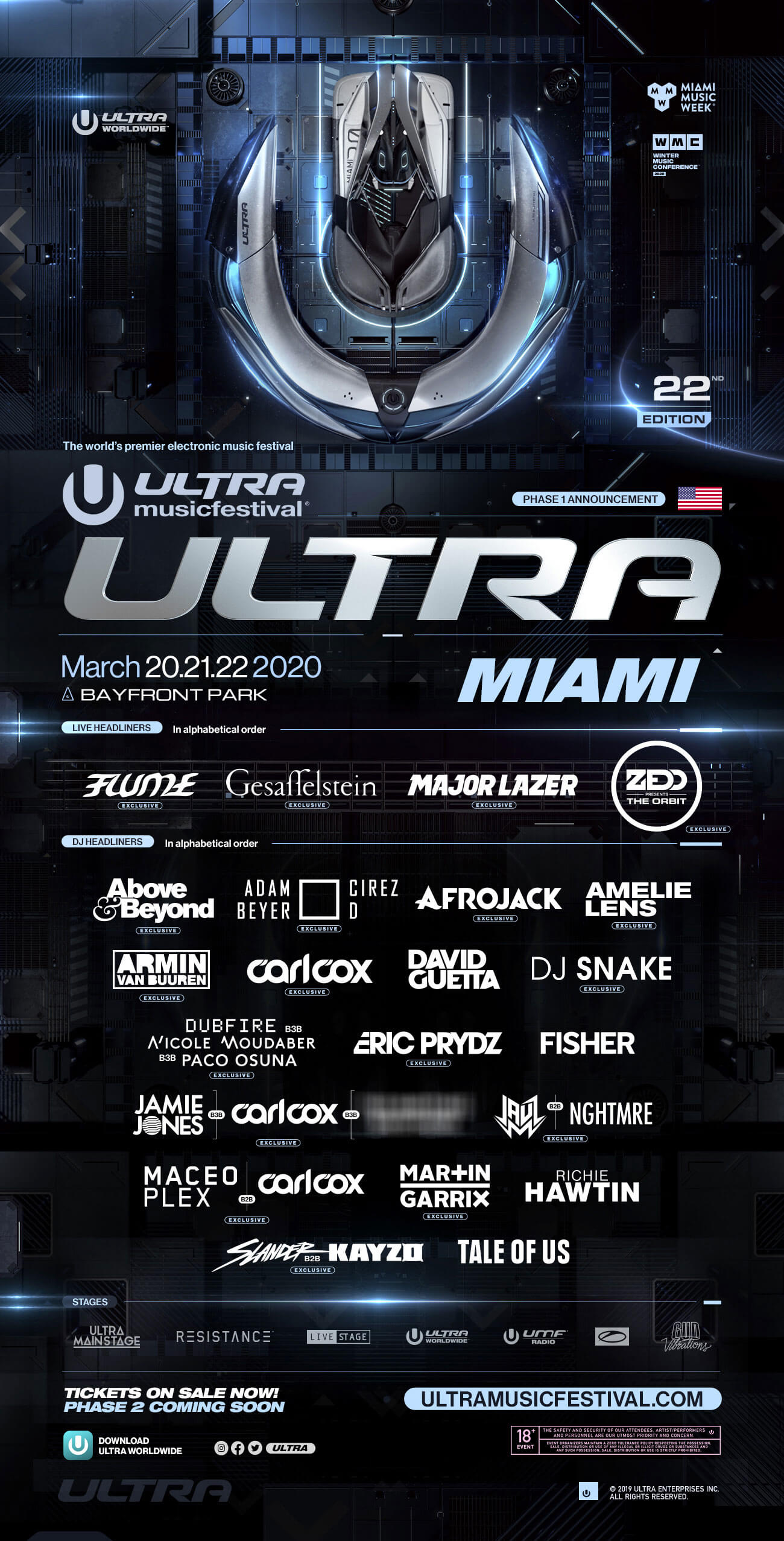
[A New Era] EDM Has Drastically Decreased in Ultra Miami 2020's Lineup [Techno and House]